How warm are Tenerife's nights, month by month?
On the south coast, the average night-time low never drops below 15.0 °C, February's figure. From June to October it stays at 18.8 °C or above, peaking at 21.1 °C in August and September.
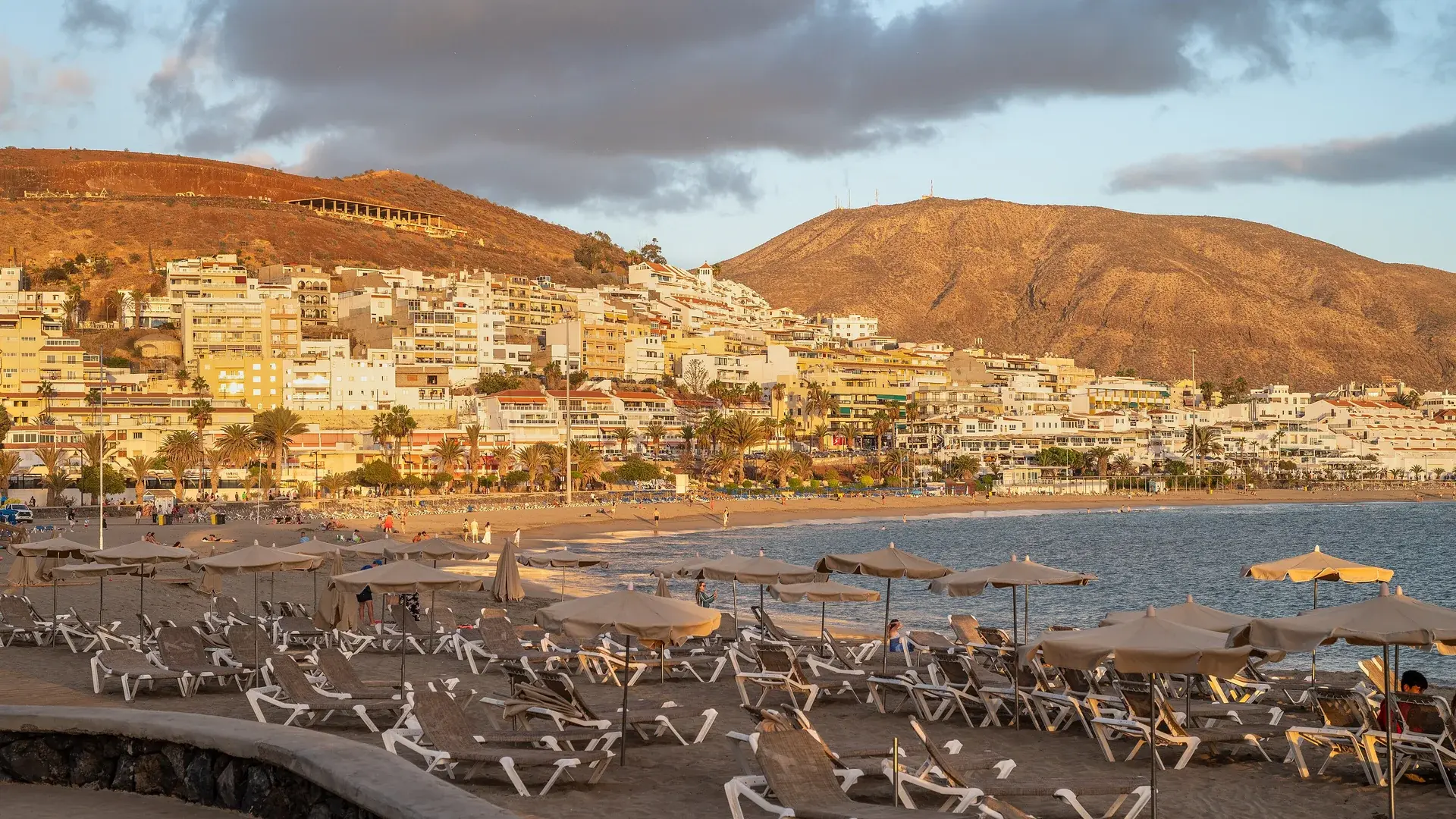
The figures come from AEMET's station at Tenerife South airport, 64 m above sea level in Granadilla de Abona, on the same coast as Los Cristianos, Playa de las Américas and Costa Adeje. The clubs along that stretch are in Tenerife South clubs.
Day highs run from 21.7 °C in January to 28.4 °C in August. These are averages of thirty years of days and nights: any single night can turn out cooler or milder. By day, the south's Blue Flag beaches are in the best beaches in Tenerife South.
| Month | Night low | Day high | Rainy days | Sunshine hours |
|---|---|---|---|---|
| January | 15.2 °C | 21.7 °C | 1.8 | 193 |
| February | 15.0 °C | 22.0 °C | 2.2 | 195 |
| March | 15.6 °C | 23.1 °C | 1.9 | 226 |
| April | 16.0 °C | 23.1 °C | 1.1 | 219 |
| May | 17.0 °C | 23.9 °C | 0.3 | 246 |
| June | 18.8 °C | 25.4 °C | 0.0 | 259 |
| July | 20.2 °C | 27.7 °C | 0.0 | 295 |
| August | 21.1 °C | 28.4 °C | 0.2 | 277 |
| September | 21.1 °C | 27.9 °C | 0.6 | 213 |
| October | 20.0 °C | 26.8 °C | 1.6 | 214 |
| November | 18.2 °C | 24.8 °C | 1.9 | 193 |
| December | 16.5 °C | 22.8 °C | 3.5 | 195 |
Is the north colder than the south?
On the coast, barely; inland and higher up, yes. Santa Cruz de Tenerife, at 36 m, has nights much like the south's: an average low of 15.3 °C in February and 21.9 °C in August.
Tenerife North airport, at 632 m in San Cristóbal de La Laguna, is another story: its January nights average 10.2 °C, and AEMET records fog there on 77.7 days a year. If your evening is in La Laguna, a jacket earns its place from November to April, when the average low stays between 10.0 °C and 13.3 °C.
For nights out in the north, in Santa Cruz and Puerto de la Cruz, see the north after dark.
| Month | Santa Cruz, low | Santa Cruz, high | Tenerife North, low | Tenerife North, rainy days |
|---|---|---|---|---|
| January | 15.4 °C | 21.0 °C | 10.2 °C | 7.7 |
| February | 15.3 °C | 21.2 °C | 10.0 °C | 7.4 |
| March | 15.9 °C | 22.1 °C | 10.7 °C | 6.8 |
| April | 16.5 °C | 22.7 °C | 10.9 °C | 6.2 |
| May | 17.8 °C | 24.1 °C | 12.0 °C | 3.8 |
| June | 19.5 °C | 26.2 °C | 14.0 °C | 2.4 |
| July | 21.2 °C | 28.7 °C | 15.7 °C | 1.7 |
| August | 21.9 °C | 29.0 °C | 16.6 °C | 1.1 |
| September | 21.7 °C | 28.1 °C | 16.5 °C | 2.8 |
| October | 20.3 °C | 26.3 °C | 15.2 °C | 6.5 |
| November | 18.4 °C | 24.1 °C | 13.3 °C | 8.3 |
| December | 16.6 °C | 22.1 °C | 11.5 °C | 8.8 |
When does it rain in Tenerife?
Mostly from October to March, and far more in the north than in the south. Tenerife South airport averages 132 mm a year over 15.2 days with at least 1 mm; December is its wettest month, with 30 mm over 3.5 days.
Tenerife North airport collects 520 mm a year over 64.0 days, and Santa Cruz 226 mm over 29.7. In the south, June and July don't average even one rainy day.
Sunshine is the constant: Santa Cruz averages 2,913 hours of sun a year, and in the south the monthly total runs from 193 hours in January and November to 295 in July.
How cold does it get up by the Teide?
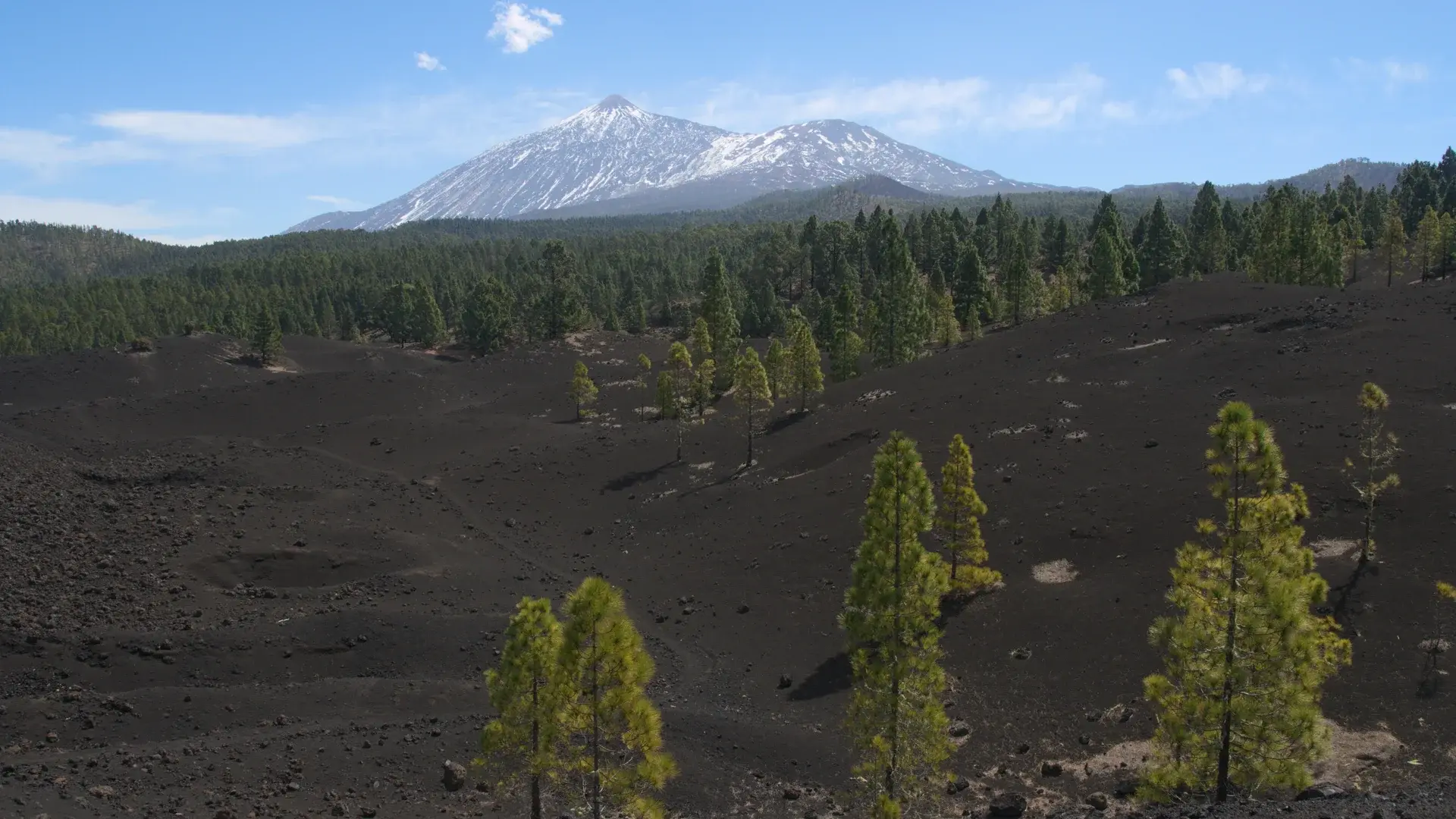
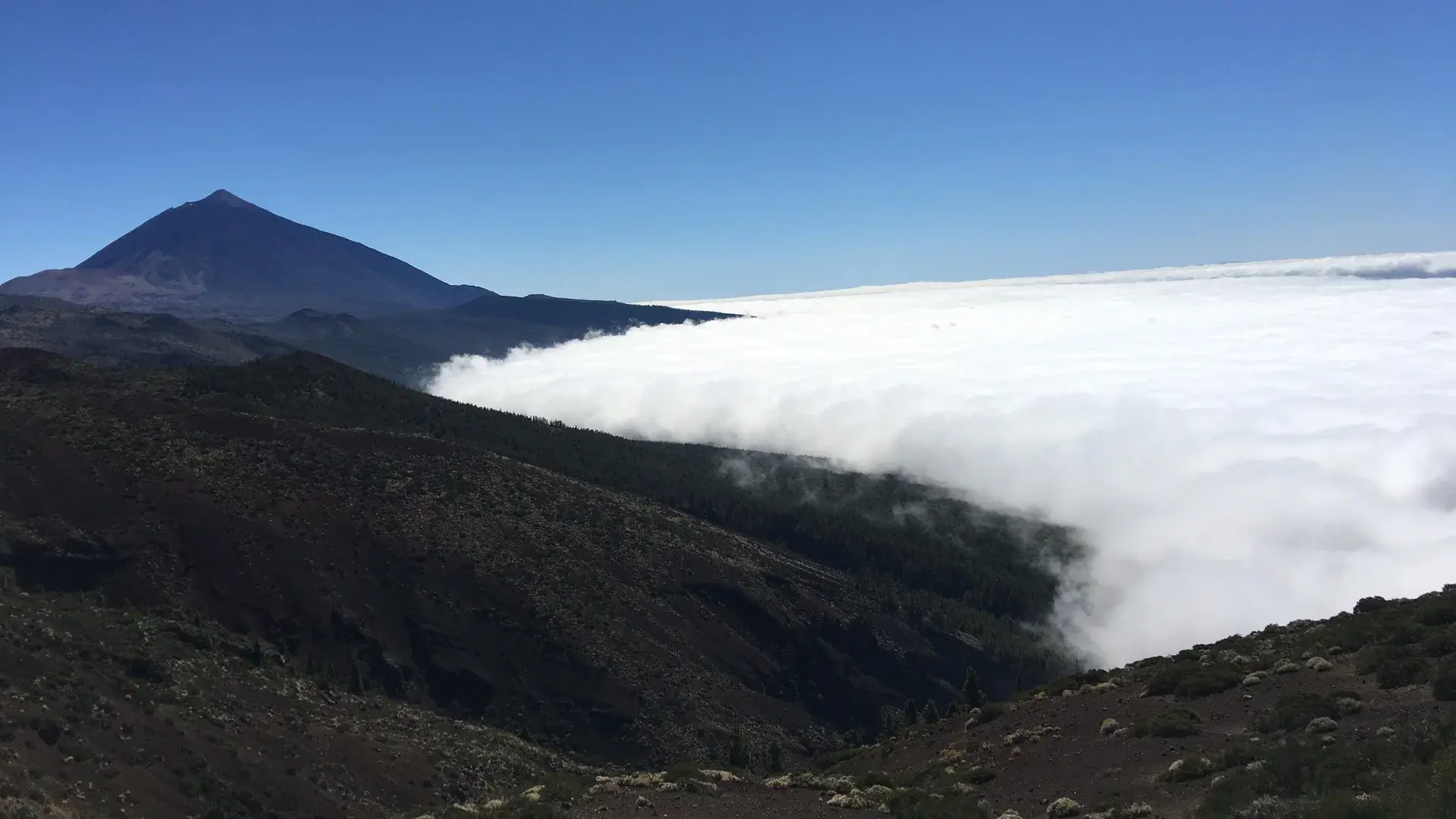
Cold enough to freeze: at Izaña, AEMET's station at 2,369 m in the island's high mountains (municipality of Güímar), the average January low is 1.1 °C, with 12.3 frost days that month.
Even in July the nights up there average 14.0 °C, while the south coast sits at 20.2 °C. Snow is possible too: February averages 2.5 days of snow.
If you drive up for the sunset before a night out, take a proper coat: the gap with the coast really is that wide. Stargazing up there has its own guide: Teide stargazing.
What to wear for a night out, season by season
A light layer from November to April; nothing extra from June to October. In the south, those winter months have average lows between 15.0 °C and 18.2 °C, the summer ones between 18.8 °C and 21.1 °C.
You feel those numbers most at beach clubs and open-air terraces (beach club nights). Inside a club, the dress code matters more than the weather, and each venue publishes its own: what to wear for a night out in Tenerife.
In February, Santa Cruz's carnival nights are spent outdoors until late, with an average February low of 15.3 °C in the city: the carnival nights. This month's club nights are in the calendar.
Where do these numbers come from?
They are AEMET's climate normals for 1981–2010: thirty-year averages, not a forecast. AEMET, Spain's state meteorological agency, publishes them station by station; we use Tenerife South airport for the south, Santa Cruz de Tenerife and Tenerife North airport for the north-east, and Izaña for the high mountains.
For the week of your trip, check AEMET's forecast, which also issues the official weather warnings for the Canary Islands.