What can you see in Puerto de la Cruz in a day?
Most of it fits into one walk along the sea, from Lago Martiánez in the east to Playa Jardín in the west, with the old town in between. Turismo de Tenerife, the island’s tourist board, suggests this direction, and it saves the sunset for the end.
Halfway along, the Casa de la Real Aduana houses the town’s tourist office.
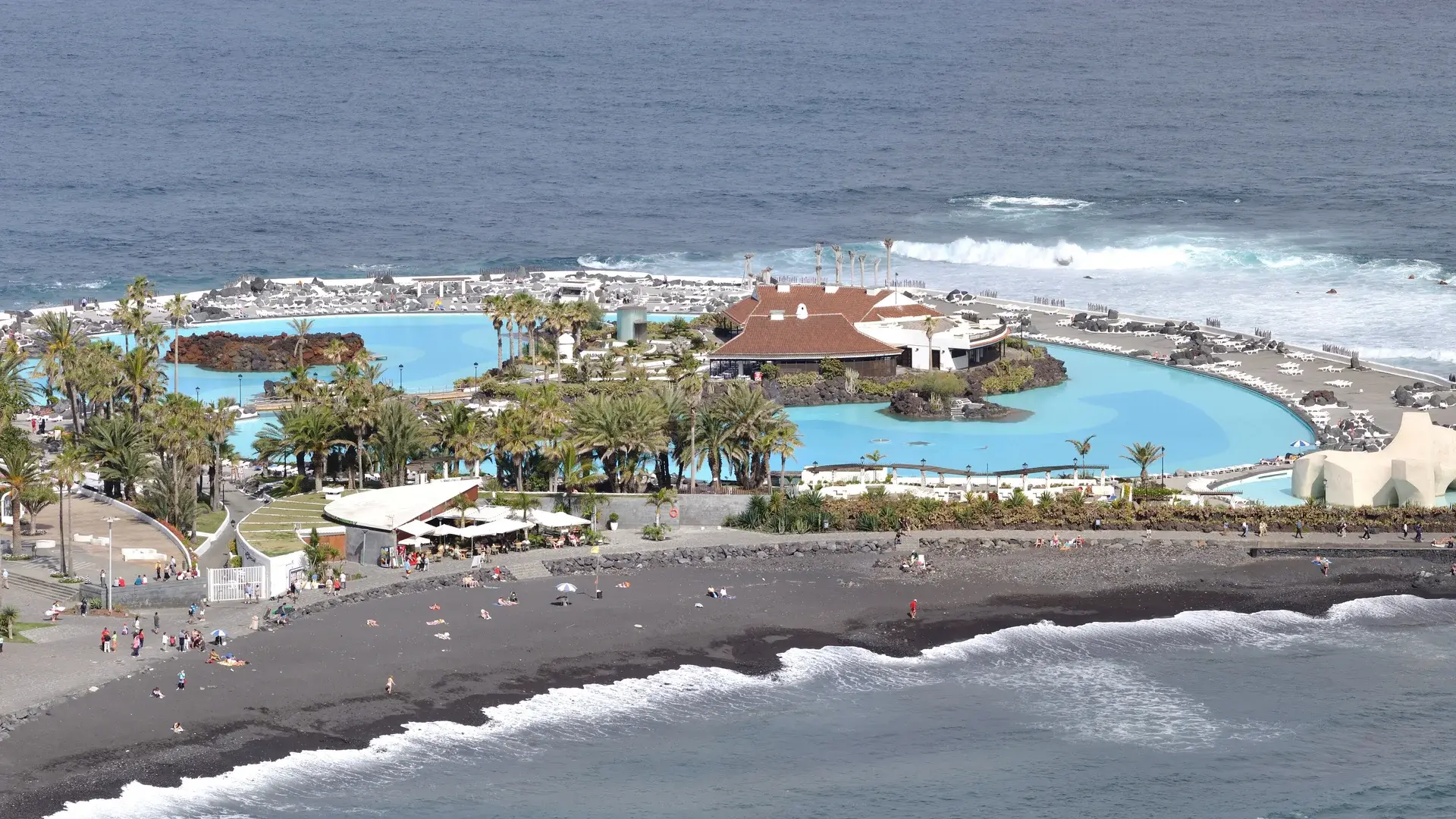
Lago Martiánez and Playa Martiánez
César Manrique’s seawater pools, beside a black-sand beach at the foot of the Martiánez cliff.
Ermita de San Telmo and Punta del Viento
A hermitage on the spot where a small battery once guarded the coast against pirates, then a viewpoint over the waves.
Nuestra Señora de la Peña de Francia
The parish church, created in 1684 from an earlier hermitage, with Baroque altarpieces and a Mudéjar coffered ceiling.
Casa de la Real Aduana and the fishing pier
The old customs house, founded in 1620, now holds the tourist office and the MACEW contemporary art museum, right on the old port.
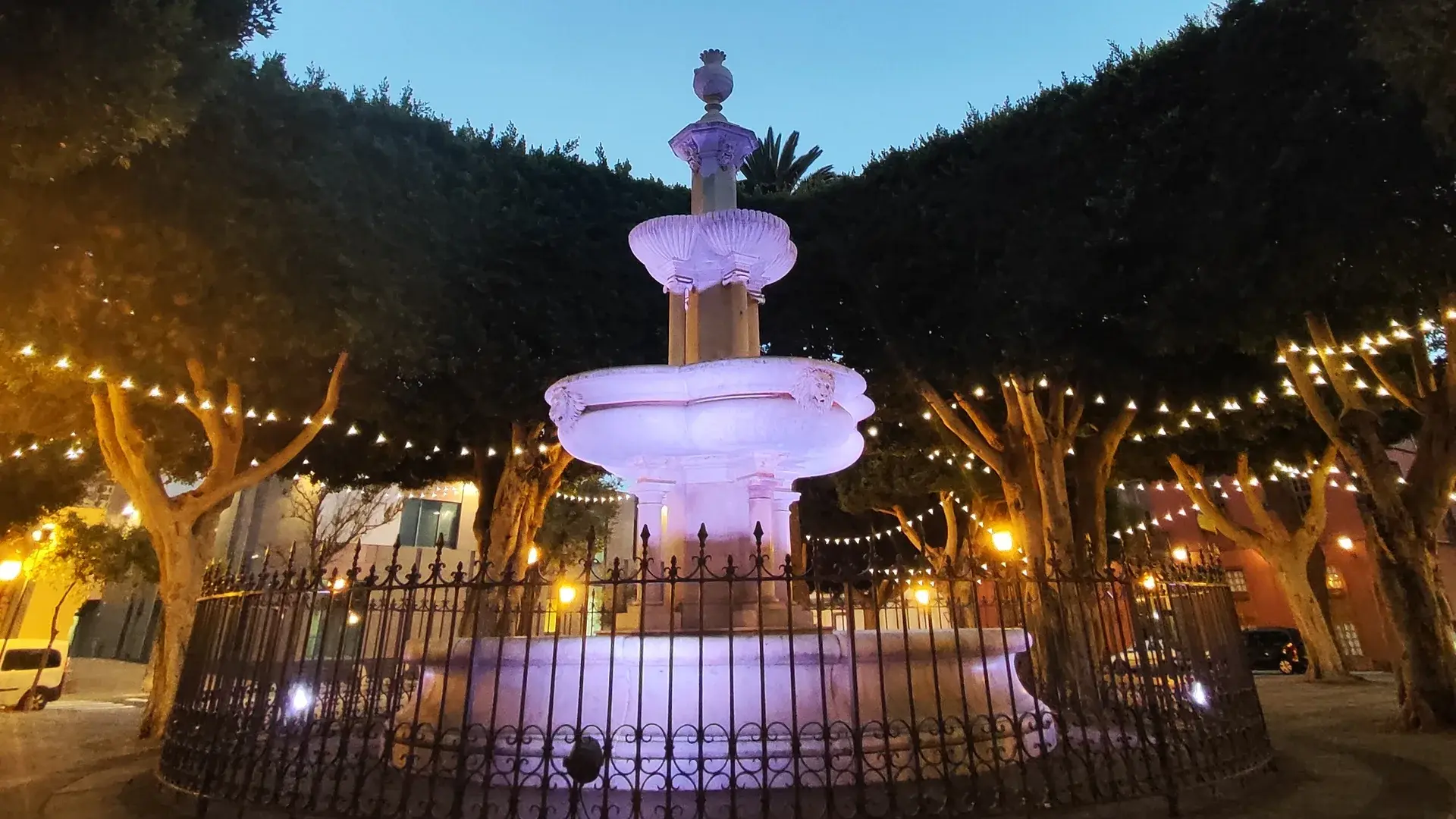
Plaza del Charco
The main square, named after a seawater pool, the Charco de los Camarones, and shaded by Indian laurels brought from Cuba.
La Ranilla
The old fishermen’s quarter, with the murals of Puerto Street Art, an open-air project begun in 2014, and the Archaeological Museum.
Castillo de San Felipe and Playa Jardín
A 17th-century fort that hosts exhibitions, next to the black-sand coves of Playa Jardín, where the tourist board sends you for sunset.
What is Lago Martiánez?
It’s a complex of seawater pools around a large artificial lake, designed by the Lanzarote artist César Manrique in the mid-1970s. Turismo de Islas Canarias, the regional tourist board, counts four pools for adults and three for children, with sun loungers, gardens, restaurants and, since 2006, a casino.
The complex is protected as a Bien de Interés Cultural in the historic garden category, and the island’s tourist board says its pools are open all year. We haven’t found opening hours or prices published by the complex itself, so we don’t give any: check them at the entrance.
Can you swim at Playa Jardín?
Usually, but check first: bathing there has been suspended more than once since 2024 after water tests by the Canary Islands’ public health service. The town hall announced a no-swimming notice for the whole beach in July 2024, the reopening in June 2025 and a temporary closure of the Punta Brava stretch in August 2026.
Each change appears in the news section of the town hall’s website. The beach itself is the largest in the municipality: a string of black-sand coves, from Playa del Castillo to Punta Brava, landscaped in César Manrique’s style.
When is the Botanical Garden open?
Every day from 09:00 to 18:00, except 1 January, Good Friday and 25 December, according to the Canary Islands Agricultural Research Institute (ICIA), which runs it. Its page gives no admission price, so we don’t either.
The Jardín de Aclimatación de La Orotava, the Botánico to locals, was created by royal order of Carlos III in 1788 to acclimatise tropical plants, and its display area still covers 20,000 m². Palms, bromeliads, aroids and the fig family are its standout collections.
It’s on Calle Retama, uphill from the centre. TITSA’s line 351 stops at El Botánico on its 20 min run from the Puerto de la Cruz bus station to La Orotava.
How do you get to Loro Parque?
By TITSA’s line 381, which runs from Plaza Reyes Católicos to Punta Brava, where the park is, on a route TITSA times at 20 min end to end. On foot, it’s the far end of the Playa Jardín seafront.
Turismo de Islas Canarias describes Loro Parque as a zoo with more than 400 animal species, including over 300 kinds of parrot and a penguinarium. For hours and tickets, the only valid reference is the park’s own website.
Sleeping in the north, going out in the south: does the bus work?
By day, yes. Puerto de la Cruz is about 25 km from Tenerife North airport and 110 km from Tenerife South, and TITSA’s line 343 links its bus station with both airports and the Costa Adeje bus station in 100 min.
The direct line 100 reaches Santa Cruz in 40 min, and line 348 climbs from Puerto de la Cruz to Las Cañadas del Teide if you’d rather spend the day on the volcano: see the Teide cable car and the summit permit.
| Line 343 | Leaves Puerto de la Cruz | Leaves Costa Adeje bus station |
|---|---|---|
| Monday to Friday | 06:00 · 10:15 · 14:45 · 18:15 | 09:15 · 12:45 · 17:30 · 21:30 |
| Weekends and holidays | 06:00 · 09:20 · 13:40 · 16:50 | 09:00 · 12:05 · 16:20 · 19:20 |
And after the last bus?
There’s no direct night bus between the two coasts. The all-night line 711 runs from the south to Santa Cruz, and the night line 104 goes on to Puerto de la Cruz every day, leaving Santa Cruz at 22:55, 23:55, 02:15 and 03:30, on a route TITSA times at 80 min.
The north has its own nights out, which we cover in Puerto de la Cruz and Santa Cruz after dark. The club nights on our calendar are in the south, between Costa Adeje and Los Cristianos: see the clubs of Tenerife South and, if you land there, the bus and taxi from Tenerife South airport.
Wondering how the north’s evenings compare with the south’s? The month-by-month figures are in Tenerife’s weather by month.