Which base in the north suits you?
It depends on how you'll spend your nights. Santa Cruz is the only one of the three with an all-night bus to the south, La Laguna adds the old town and the tram, and Puerto de la Cruz puts you by the sea.
| Base | By day | To the club nights in the south | Airport nearby |
|---|---|---|---|
| Santa Cruz de Tenerife | The capital: carnival, pedestrian shopping streets, sculptures along its avenues | Night line 711 to Costa Adeje, about 90 min | Tenerife North |
| San Cristóbal de La Laguna | World Heritage old town and university city | Tram to Santa Cruz in about 35 min, then the 711 | Tenerife North, in the same municipality |
| Puerto de la Cruz | Historic quarter, Lago Martiánez, volcanic-sand beaches | Line 343, by day only | Tenerife North |
Santa Cruz: the capital, with the night bus at the door
If you want to go out in the south and sleep in the north, Santa Cruz is the practical choice. TITSA's line 711 leaves the Intercambiador, the city's bus station, through the night, with the last departure at 04:00, and reaches the Costa Adeje bus station in about 90 min.
By day, Turismo de Tenerife describes a capital, since 1833, with lively pedestrian shopping streets, Calle de La Noria for restaurants and bars, and sculptures by Henry Moore, Joan Miró and other artists along its avenues. It is also the city of the carnival.
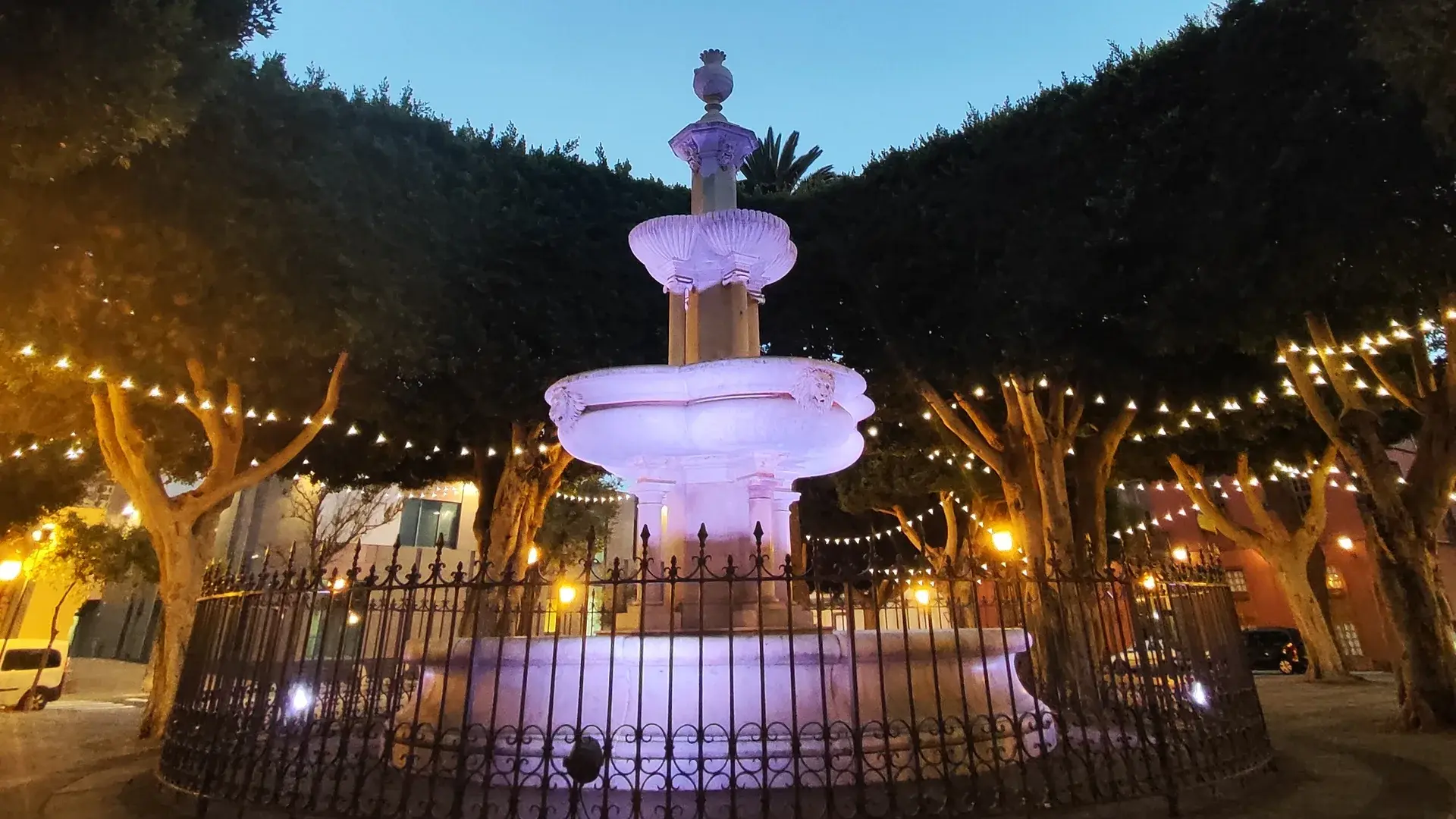
La Laguna: the old town on the tram line
La Laguna is the base for walking a World Heritage old town and for cooler, quieter evenings. Tram line 1 links it with Santa Cruz in about 35 min, and runs round the clock on Saturdays, Sundays and public holidays, so at the weekend you can ride down to the 711 at any hour.
Up at 632 m, AEMET's Tenerife North station averages a January low of 10.2 °C, so pack a jacket. What to see on foot and what the tram costs: La Laguna, Tenerife.
Puerto de la Cruz: the island's first resort
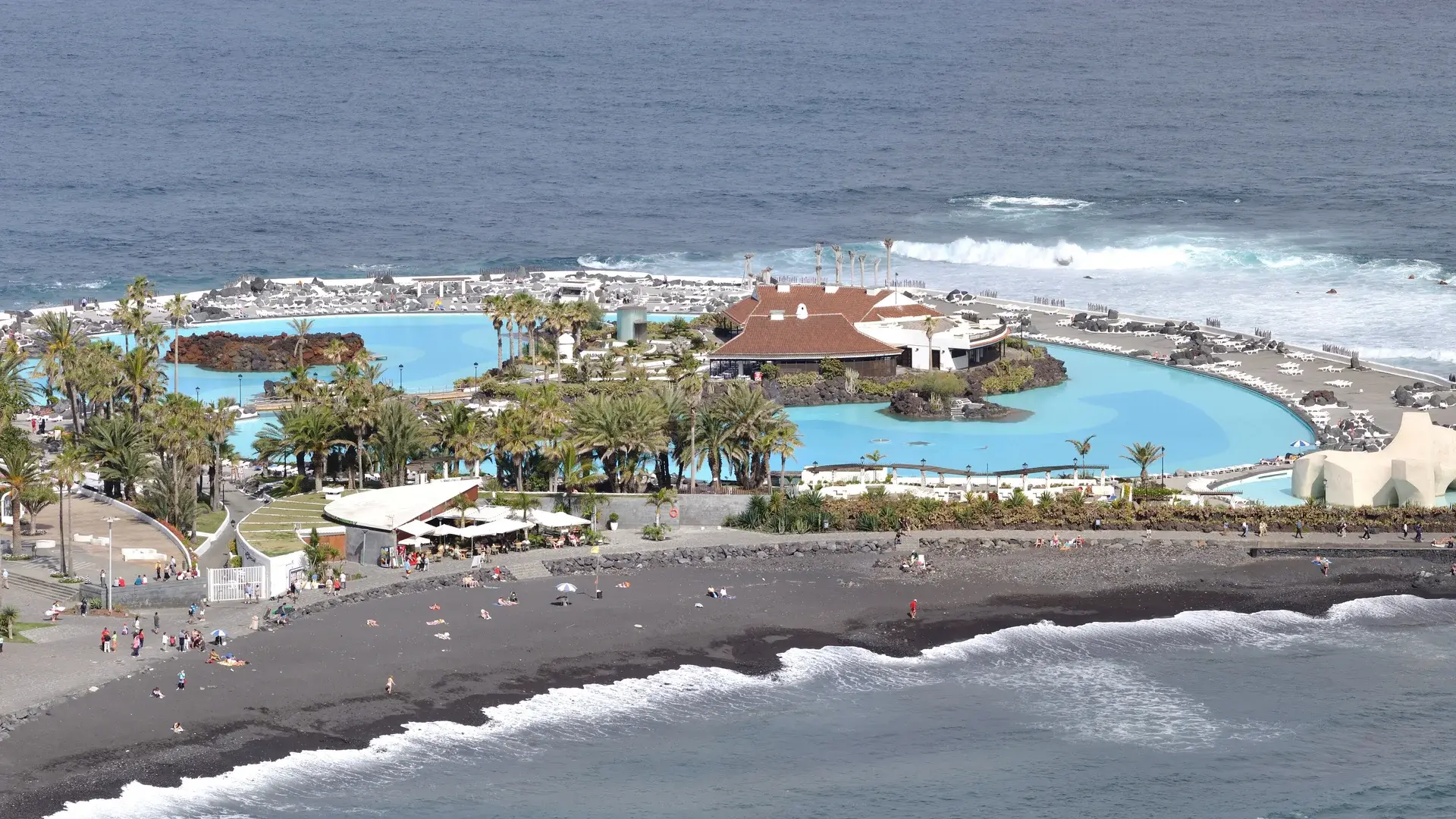
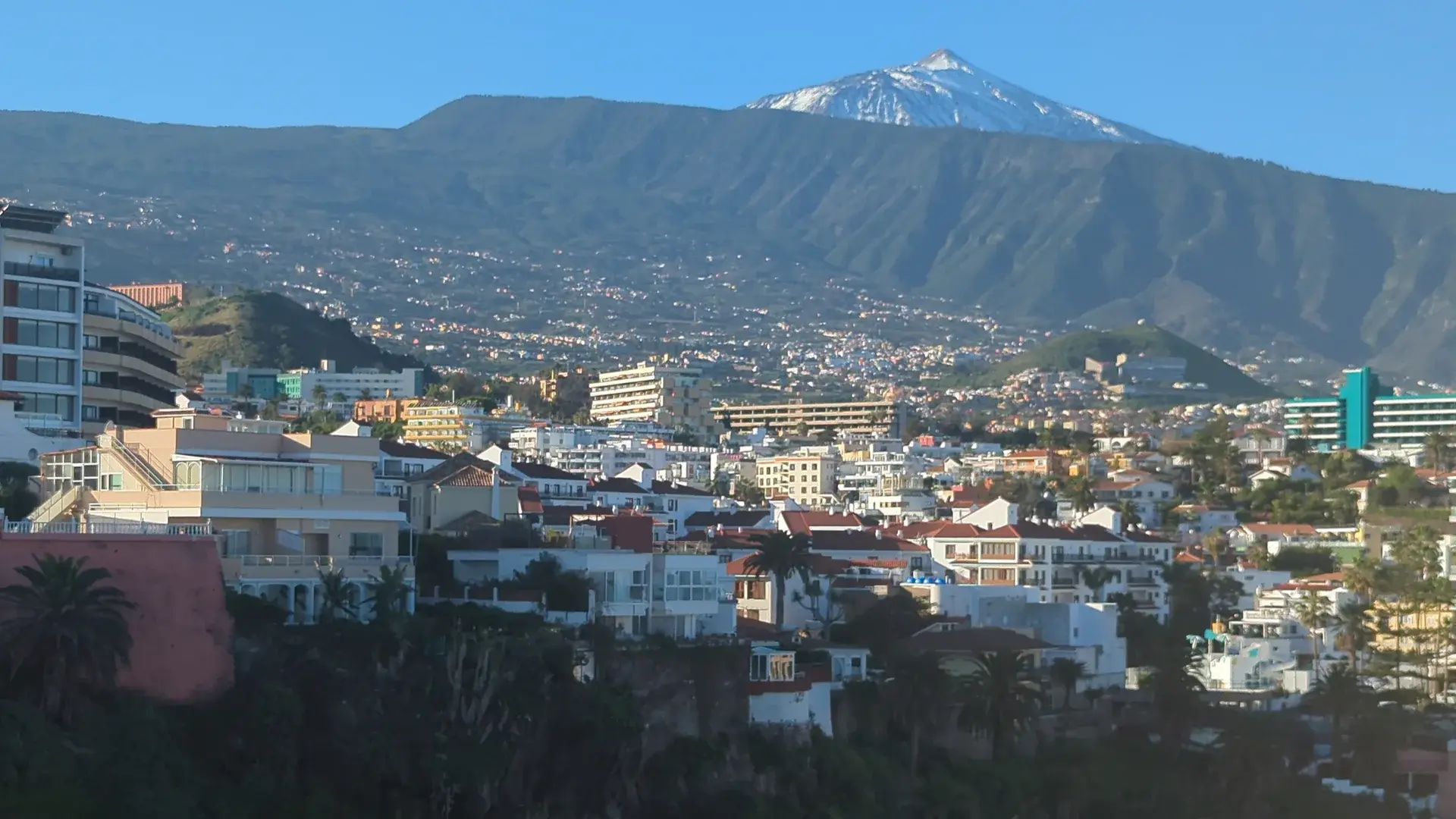
Puerto de la Cruz is the base for the sea and a long tradition of welcoming visitors. Turismo de Tenerife calls it the first tourist destination in the Canary Islands, recommended as a retreat in the nineteenth century, and a National Tourist Interest Site since 1955.
Its historic quarter has more than 140 protected buildings, and its coast has the lagoons of Lago Martiánez, the natural pools of San Telmo and volcanic-sand beaches. What to see there by day: things to do in Puerto de la Cruz; for its evenings, the north by night.
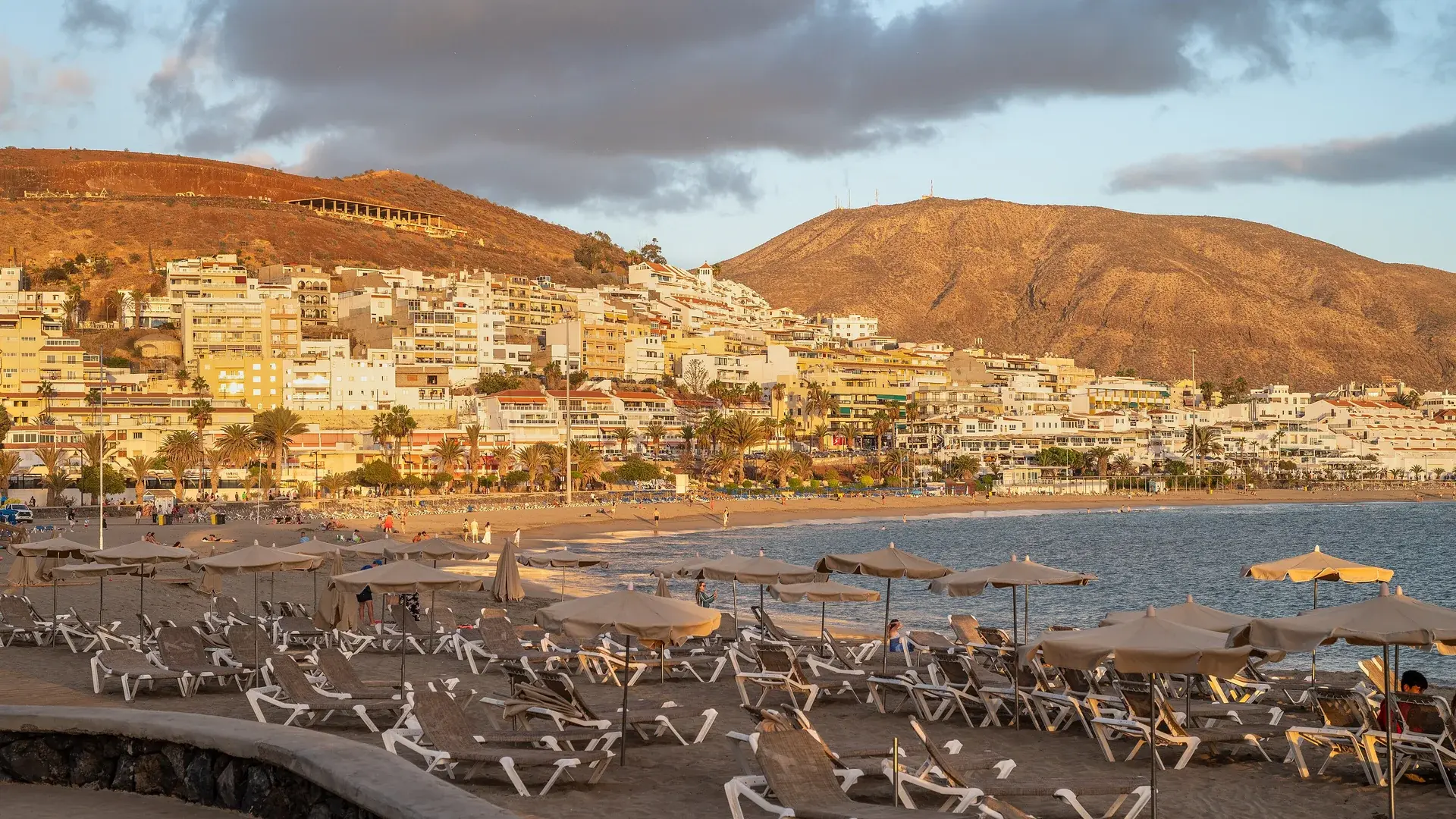
Reaching the south's club nights is the weak point. TITSA's line 343 links Puerto de la Cruz with both airports and the Costa Adeje bus station, but it runs by day: on weekdays its last bus towards Costa Adeje passes Tenerife South airport at 19:30. We found no night connection on the TITSA pages we checked.
Is the north colder at night?
On the coast, hardly. AEMET's normals for 1981–2010 give Santa Cruz an average January low of 15.4 °C, close to the 15.2 °C of Tenerife South airport; the difference comes with altitude, and the Tenerife North station in La Laguna averages 10.2 °C.
So Santa Cruz, by the sea, has nights much like the south's, while La Laguna asks for a jacket. AEMET publishes no normals for a station in Puerto de la Cruz. Month by month: Tenerife weather by month.
Staying in the north for the carnival
For the carnival, stay in Santa Cruz or La Laguna. The street party fills Santa Cruz from 19 February to 28 February 2027, and the two cities are joined by the tram, which runs round the clock at weekends.
Which of those nights have dancing in the street, and the buses back to the south: Santa Cruz carnival nights.
Which airport if you stay in the north?
Tenerife North, at Los Rodeos in the municipality of La Laguna, which Turismo de Tenerife describes as close to the capital and to Puerto de la Cruz. If your flight lands in the south, line 343 links Tenerife South with Puerto de la Cruz, and the 711 links it with Santa Cruz.
How the two airports compare for where you sleep and where you go out: Tenerife North or South airport.